Is Balochistan’s Freedom Imminent?
By any measure—geography, resources, or political volatility—Balochistan is one of South Asia’s most strategic yet troubled regions. Occupying nearly 44 percent of Pakistan’s landmass, it’s the home to only about six percent of its population (around 12 million people). Balochistan is rich in minerals and natural gas. But for its people, the province remains a symbol of neglect, repression, and unrealised autonomy. In the light of the decades-long insurgency in the region, the recent Pahalgam terror attack, international criticism of Pakistan’s policies, and subtle regional interference, the question on whether Balochistan is on the brink of independence has surfaced again.
A legacy of discontent
Balochistan was forcibly annexed into Pakistan in March 1948, though the princely state of Kalat initially opted for independence. That decision remains a sore point for many Baloch nationalists who view the integration as illegitimate. Since then, five insurgencies—in 1948, 1958, 1962, 1973, and the ongoing rebellion since 2004—have marked the province’s history. The core grievances are consistent: underdevelopment, resource extraction without local benefit, high-handedness of the military, and ethnic marginalisation.
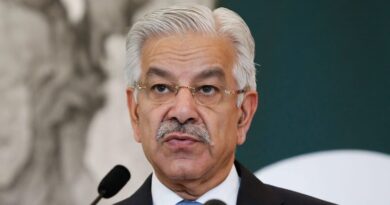
Also Read: Pak Defence Minister Admits to Sponsoring Terrorism
Natural gas, first discovered in Sui in 1952, fuelled the economies of Punjab and Sindh. Yet Balochistan itself did not receive gas supply to most districts until the 2000s. The province contributes about 36 percent of Pakistan’s total gas production but gets only a small fraction of the royalties. According to a 2017 estimate, 88 percent of Balochistan’s population lacked access to piped natural gas. The number may have increased over the years but is still far from satisfactory. Literacy hovers around 43 percent, significantly below the national average of about 59 percent. Unemployment is estimated to be over 10 percent officially, though underemployment and informal work obscure the real picture.
The latest insurgency
The latest insurgency, launched in 2004 after the killing of tribal leader Nawab Akbar Bugti by the Pakistani military, has become more sophisticated. It’s now less tribal and more ideological. Groups like the Baloch Liberation Army (BLA), Baloch Republican Army (BRA), and Baloch Liberation Front (BLF) operate in cells and have carried out high-profile strikes that include the 2019 attack on the Chinese consulate in Karachi, claimed by the BLA, and the repeated sabotage of the China-Pakistan Economic Corridor (CPEC) infrastructure, particularly around Gwadar. The BLA was designated a terrorist organisation by Washington in 2019 but it still has a fairly active propaganda online network and through the diaspora.
India’s role: Support or subversion?
India’s involvement in Balochistan has long been a point of contention. Pakistan accuses India of funding and training Baloch insurgents, especially via consulates in Afghanistan. The 2016 arrest of Kulbhushan Jadhav, a former Indian Navy officer, intensified this narrative. Pakistan claimed he was an Indian spy working with Baloch militants. India denied the charges, saying, he was kidnapped from Iran. Indian Prime Minister Narendra Modi’s 2016 Independence Day speech, where he referenced “the people of Balochistan,” was viewed as a sharp break from traditional Indian diplomacy. It signalled rhetorical support for Baloch aspirations. Several Baloch leaders, including Brahumdagh Bugti, have lived in exile in countries like Switzerland and Afghanistan, allegedly receiving indirect Indian support, although no direct evidence has been publicly disclosed.
While India officially denies involvement, it’s clear that Balochistan has become a card in the broader Indo-Pak rivalry.
Regional and international dynamics
The international community’s stance on Balochistan is mostly muted. While Amnesty International and Human Rights Watch have documented disappearances and extrajudicial killings, realpolitik dominates. China has invested over $60 billion in CPEC, much of it passing through Balochistan, particularly the Gwadar port. Stability in the region is non-negotiable for Beijing. Washington, while occasionally critical of Islamabad’s human rights record, still sees Pakistan as a nuclear state vital to regional balance and Afghan security. The United Nations has not formally recognised any movement for Balochistan’s self-determination.
Is independence near?
Unlikely. Pakistan has military supremacy over the region, with thousands of troops stationed in the province, backed by a vast intelligence network. The State has a tight grip. That aside, Baloch armed groups are fractured and often disagree on ideology and strategy. There’s also lack of international recognition. Unlike movements in Palestine or Tibet, Balochistan lacks a strong global diplomatic backing. In fact, major cities like Quetta, Turbat, and Gwadar see less support for secession than the rural, tribal areas.
While full independence may be out of reach for now, the underlying drivers of unrest—resource injustice, ethnic alienation, and repression—remain unresolved. Pakistan’s military-first approach may contain the insurgency temporarily, but it cannot extinguish it unless there’s serious political engagement and economic inclusion. But Islamabad may have to battle more demons in Baloch if India carries out a full-scale retaliatory strike on Pakistan following the Pahalgam terror attack.